
EV charging · Perth
EV charger installation in Perth
The fastest charger isn’t always the right one. How fast your car charges at home depends on three things: the charger, your property’s supply and the car’s own on-board charger. The slowest of the three sets the pace. Find out which limits you before you buy.
The three limits on home charging speed
The charger
Home chargers are commonly sold as about 7 kW (single phase), 11 kW or 22 kW (three phase). The rating is a maximum, not a promise.
Your supply
Single phase limits a charger to about 7 kW. 11 kW and 22 kW need three phase. Your existing load, the switchboard and network rules also affect what can be connected.
Your car
Every EV has an on-board charger with its own AC limit. A 22 kW charger won’t make a car with an 11 kW limit charge at 22 kW.
Home AC charging isn’t DC fast charging. Public fast chargers supply DC power directly to the battery, bypassing the car’s on-board charger, which is why they’re much faster. A home wall charger supplies AC, so the car’s AC limit applies.
EV charging adviser
Find the right EV charging setup for your car and home.
Enter what you know. “Not sure” is a fine answer: your switchboard photo will fill in the rest.
Charging adviser and time calculator
Indicative estimates for home AC charging.
The adviser needs JavaScript. In short: your charging rate is the lowest of the charger’s rating, your supply (about 7 kW on single phase) and your car’s AC limit. Charging time is roughly the energy needed (battery size × percentage added) divided by that rate, plus around 10% for losses.
Switchboard space
Will an EV charger fit on my switchboard?
An EV charger normally needs its own circuit with its own protection on the switchboard. Solar-aware charging and load management can add monitoring equipment too. Whether that fits depends on a few separate questions:
- Physical space is not the same as supply capacity. Empty spaces on the board don’t mean your supply can handle the extra load.
- Protection devices come in different widths. The space needed depends on the devices and the arrangement.
- Single phase and three phase installs differ. Three phase chargers need three phase protection.
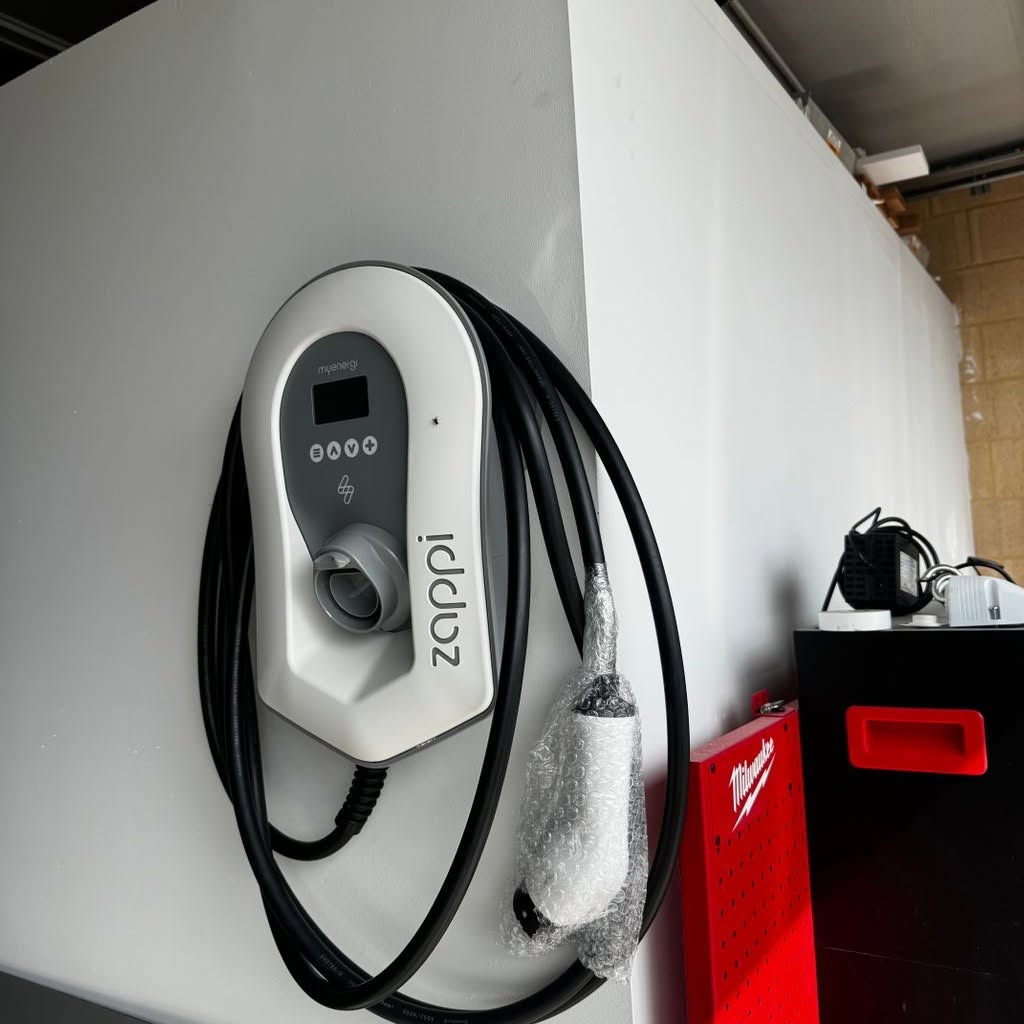
- Monitoring adds equipment. Solar-surplus charging and load management usually need CT clamps (current sensors) fitted in the switchboard. On very full switchboards, you may need a wireless sensor instead. In that case we recommend the myenergi zappi with a harvi wireless sensor.
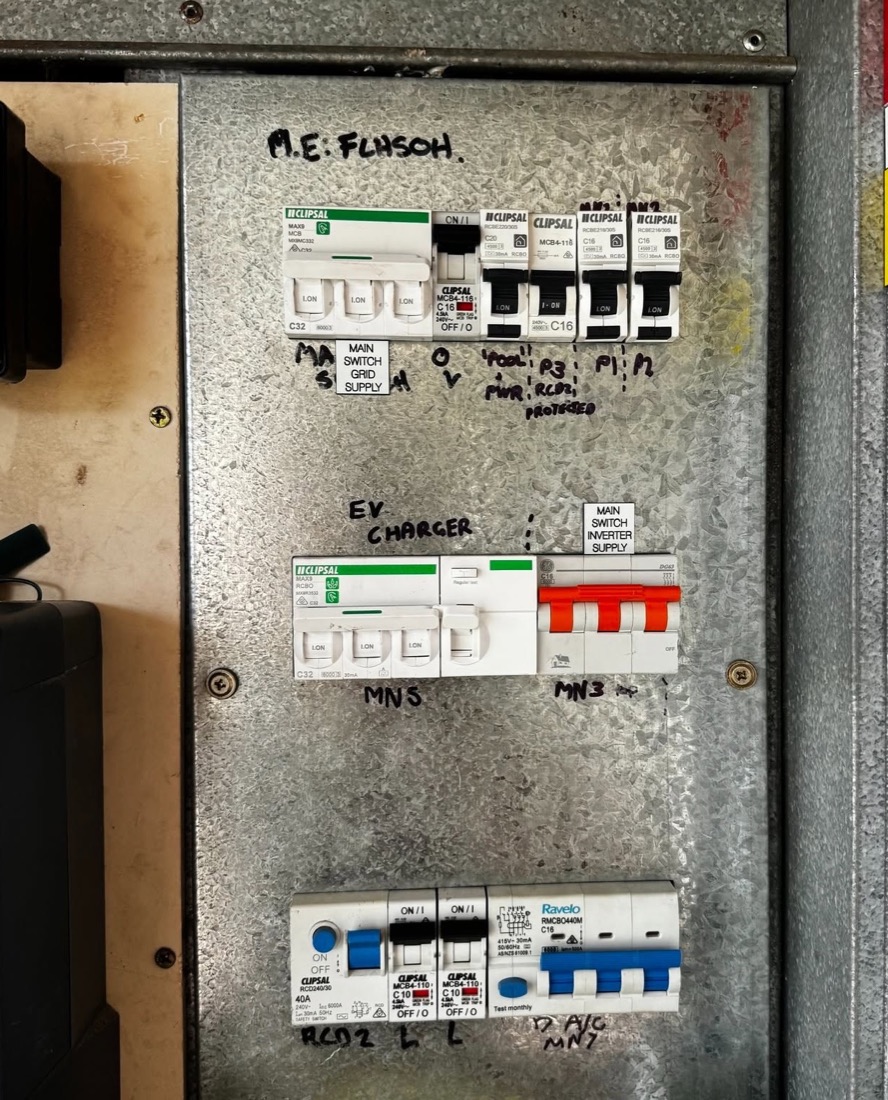
Send us a switchboard photo
Open the switchboard door and photograph the front of the board. Never remove covers or touch anything inside. A clear photo usually tells us whether there’s room, what protection you have and whether you’re single or three phase.
Case studies
Tricky installs we’ve made happen
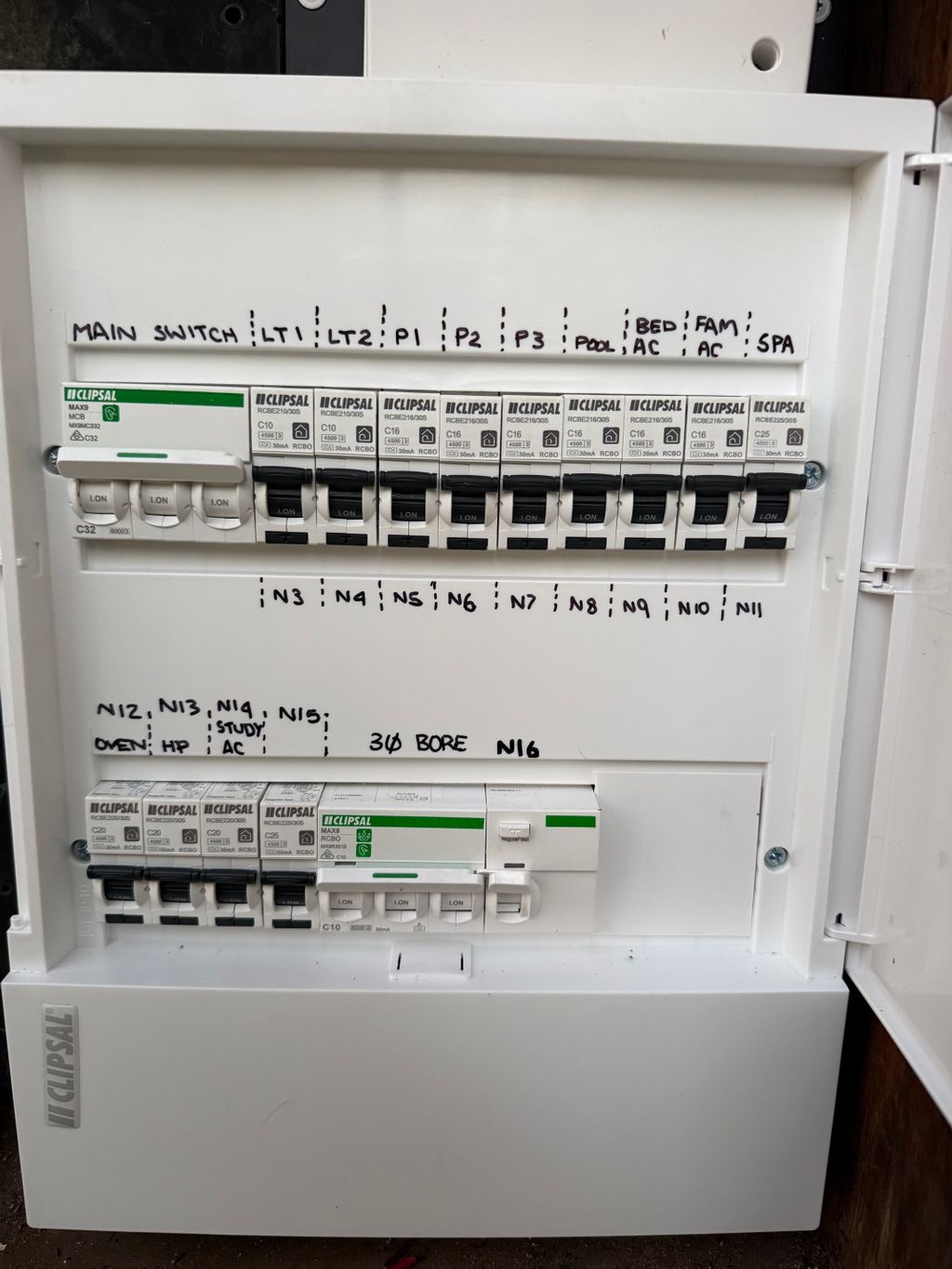 City Beach: 3-phase switchboard upgrade and EV charger installAn extremely messy old switchboard containing asbestos, replaced with a new labelled 3-phase board, then a customer-supplied 3-phase EV charger installed on a two-storey home with a raked ceiling.
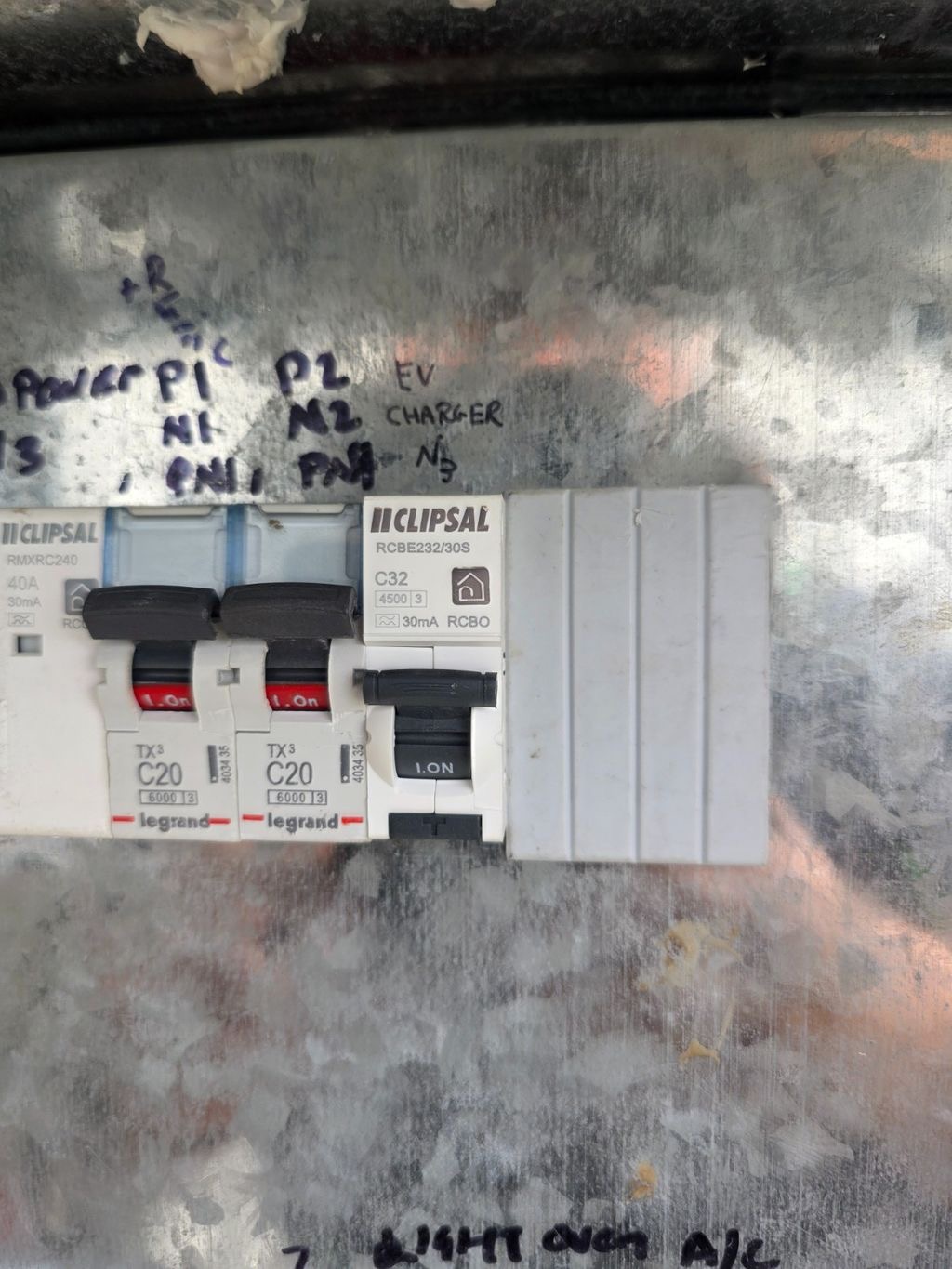
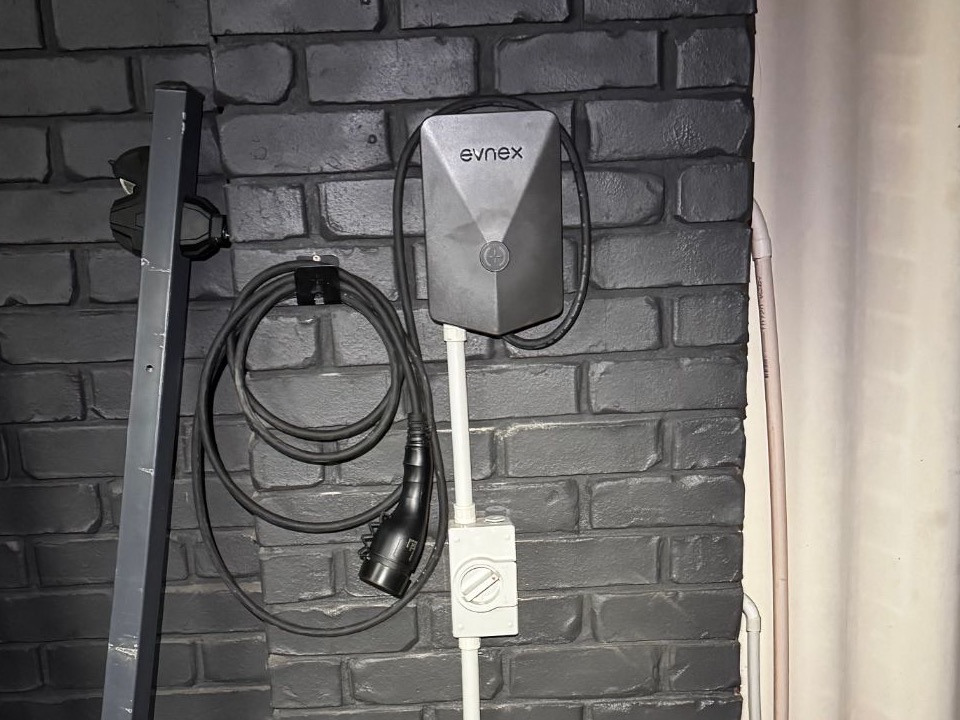 Yokine: Evnex E2 Flex EV charger with trenching and a switchboard reworkAn Evnex E2 Flex smart charger installed in Yokine, with a trench to the install location, a compact 40A RCD to free up switchboard space, and a CT clamp pre-wired for future solar.
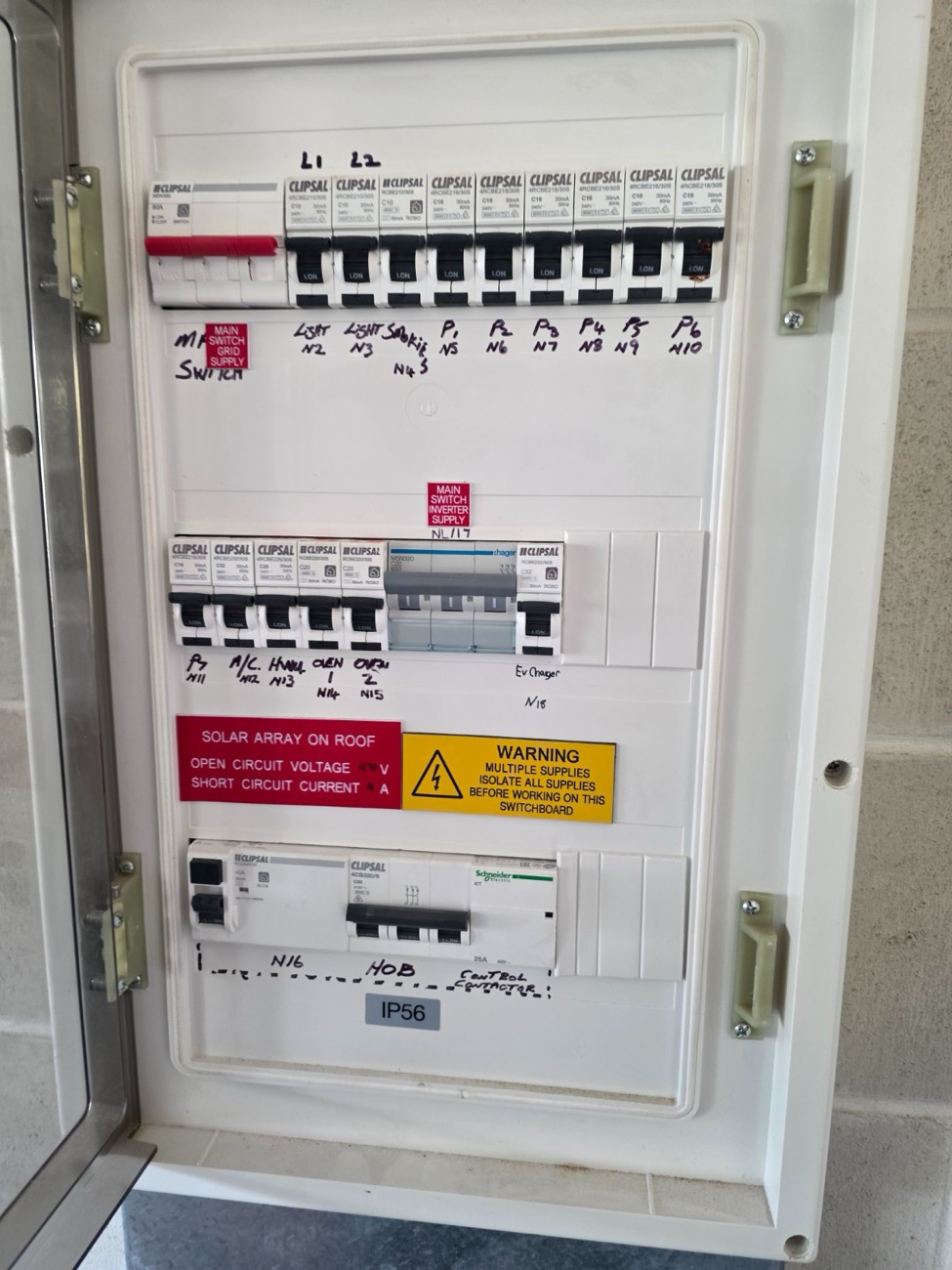
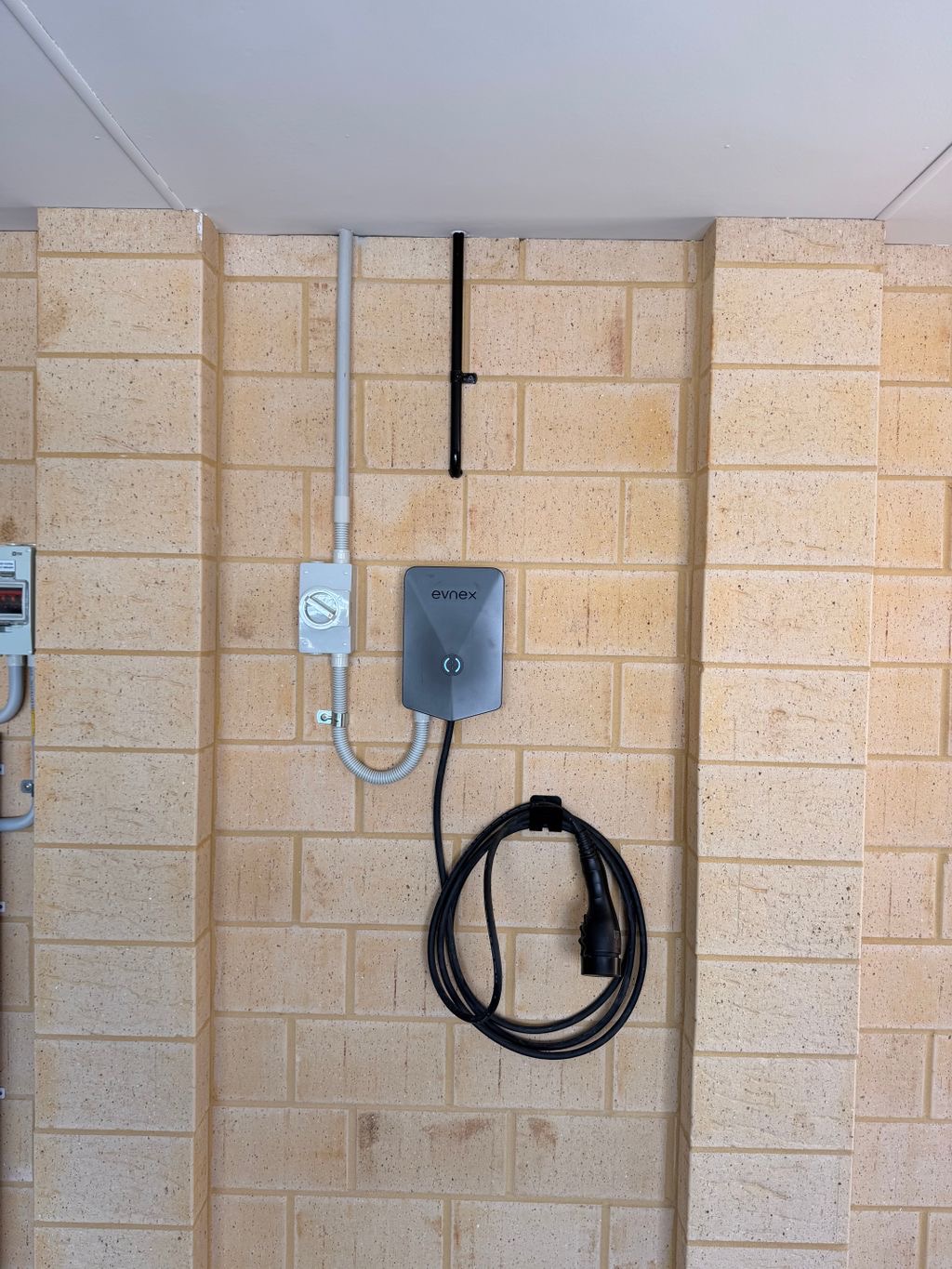 Eglinton: Evnex E2 Core charger in a detached garage, 40 metres from the switchboardA single-phase Evnex E2 Core smart charger installed in a detached garage on a two-storey home, with trenching, conduit and about 40 metres of cable back to the switchboard.
Solar and charging control
Home EV charging options explained
These options can work together. For example, a compatible charger can use excess solar during the day, charge during cheaper electricity periods and automatically adjust to household demand.
| Approach | How it works | Suits | What it needs |
|---|---|---|---|
| Basic charging | Charges when plugged in, up to the limits of your car, charger and electrical installation. | Drivers wanting straightforward charging without smart controls. | Compatible charging equipment and a suitable, correctly protected circuit. |
| Scheduled charging | Charges at selected times using settings in your car or charger. | Drivers wanting to use cheaper electricity periods or charge at convenient times. | Scheduling supported by your car or charger. |
| Solar-surplus charging | Adjusts charging to use spare solar after household needs are met. Pauses when surplus is insufficient, or allows a top-up where supported and enabled. | Drivers whose cars are home during solar-generating hours. | Solar panels, a compatible solar-aware charger and suitable metering or current sensors. |
| Household load management | Automatically reduces or pauses EV charging when household demand approaches the configured supply limit. | Homes where charging alongside other appliances could exceed available electrical capacity. | A compatible charger, supply monitoring and limits configured by your installer. |
Which setup suits your home?
- Car at home on sunny days: solar-surplus charging can put spare solar into your car instead of exporting it to the grid.
- Car mainly charged overnight: scheduled charging can help you take advantage of cheaper electricity periods, if your tariff offers them.
- Solar and a home battery: the charger setup and battery settings need to work together if you want to keep stored energy for your home rather than use it to charge the car.
- Limited electricity supply capacity: load management can adjust charging to suit the available capacity and may avoid the need for a supply upgrade, subject to an assessment of your installation.
These features can work together. We’ll help you choose a setup that suits your home and driving habits.
Have a home battery? Let us know when requesting a quote. Depending on your system and settings, EV charging may draw from stored battery energy.
We’ll assess your electrical supply and advise whether load management or electrical upgrades are needed.
Chargers we install
We’re specialist installers for myenergi zappi and Evnex chargers, and our team has completed all of the manufacturer training for both. We also install Tesla chargers and other brands, and can install a charger you already own, subject to suitability.
Considering an Evnex? We match Evnex’s advertised price, plus Evnex’s shipping fee. Evnex’s charger comparison guide is a handy way to see which model suits you.
Prefer a portable charger? A dedicated 32A outlet
You don’t have to install a hard-wired wall charger. If you have a portable EV charger that takes a 32A plug, we can install a dedicated 32A outlet with its own isolating switch, on its own protected circuit. You simply plug the portable charger in.
- A simple setup that works with a compatible portable charger
- Weatherproof outlet with an isolating switch, on its own circuit
- Faster than charging from a normal power point
A hard-wired wall charger is usually the better choice if you want features like smart scheduling, solar-surplus charging or load management. We’ll check your switchboard and supply, and tell you which suits your car and home.
Get an EV charging price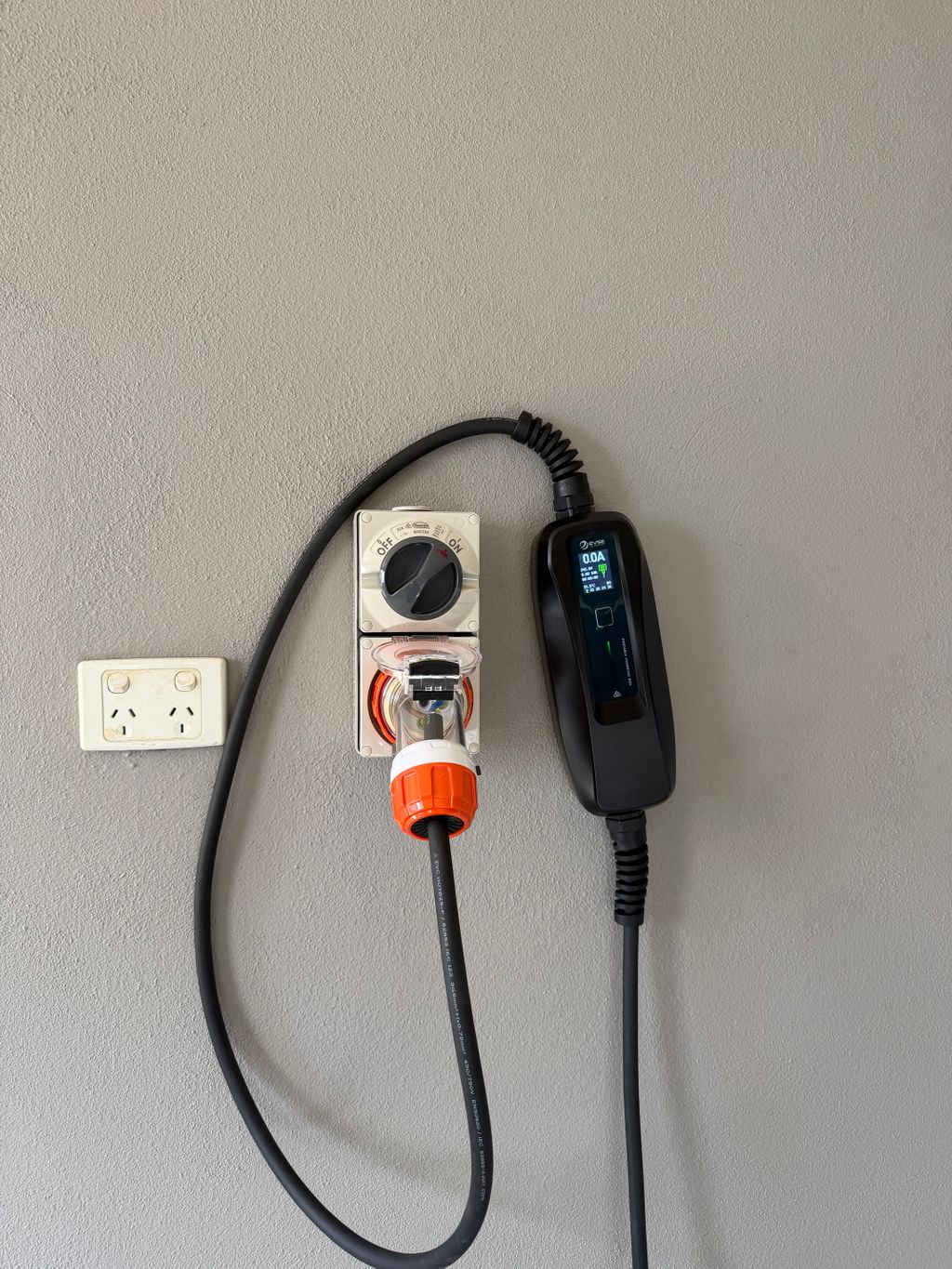
What does an EV charger install cost?
Most installs cost $650 to $1,200 including GST. This is for installing the charger. The charger itself is extra.
- Closer to $650: a single phase charger right next to the switchboard, with no CT clamps (location dependent)
- Closer to $1,200: a three phase charger with CT clamps, up to 15 metres from the switchboard
A CT clamp lets the charger see how much power your home is using.
What costs extra:
- Switchboard alterations, upgrades or rearranging
- More than 15 metres of cable
- Double storey homes
- Trenching to run cable underground
- A detached garage or carport
Get a formal quote. Every EV charger install is different, so we always recommend asking for a formal quote. Send us a photo of your switchboard and where you want the charger. We’ll check your switchboard, work out how much cable you need, and look at your property on satellite maps to see how we can get the cable from the switchboard to the charger. Then we’ll give you a price before any work starts.
These prices include GST and are a guide only. Your final price depends on your home and the work involved. Travel or call-out fees may apply depending on your location and how much work we’re doing. We’ll always give you a price before any work starts. We’ve done significant industry research to make sure our prices are in line with other reputable companies.
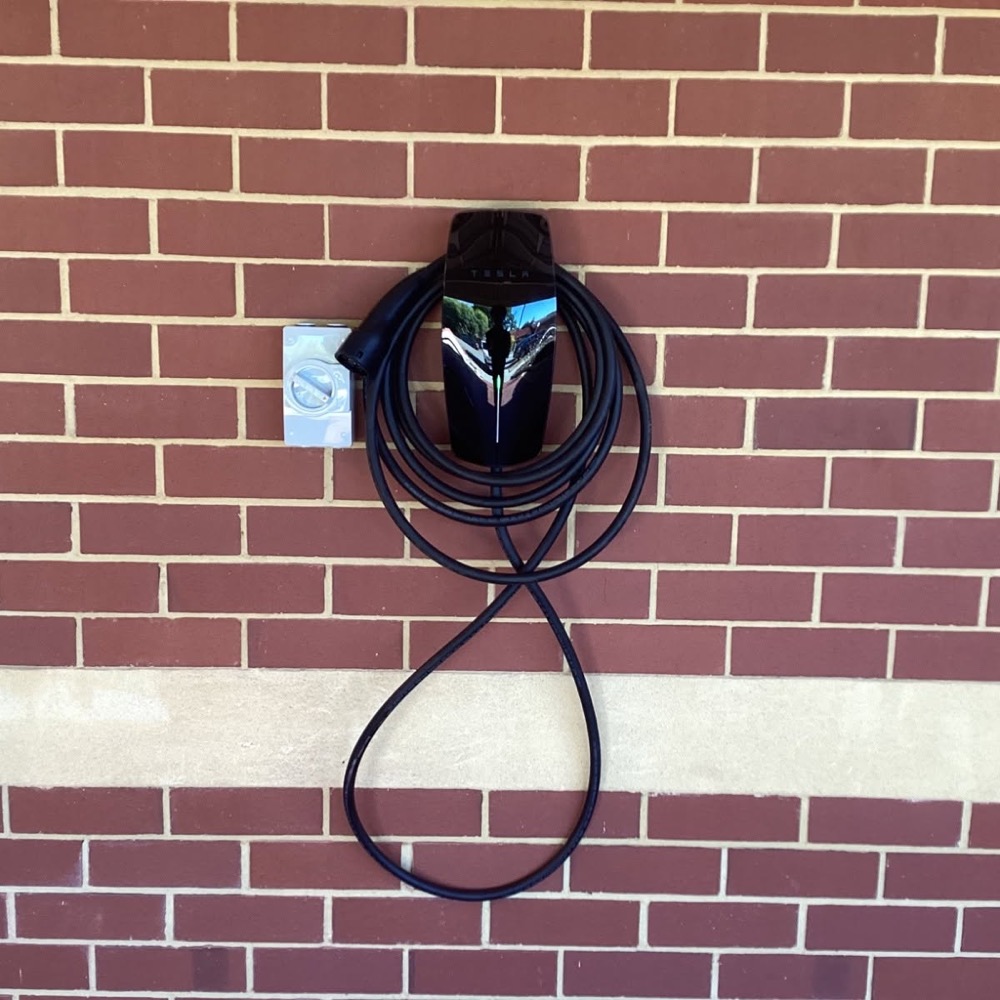
Tesla Wall Connector installation
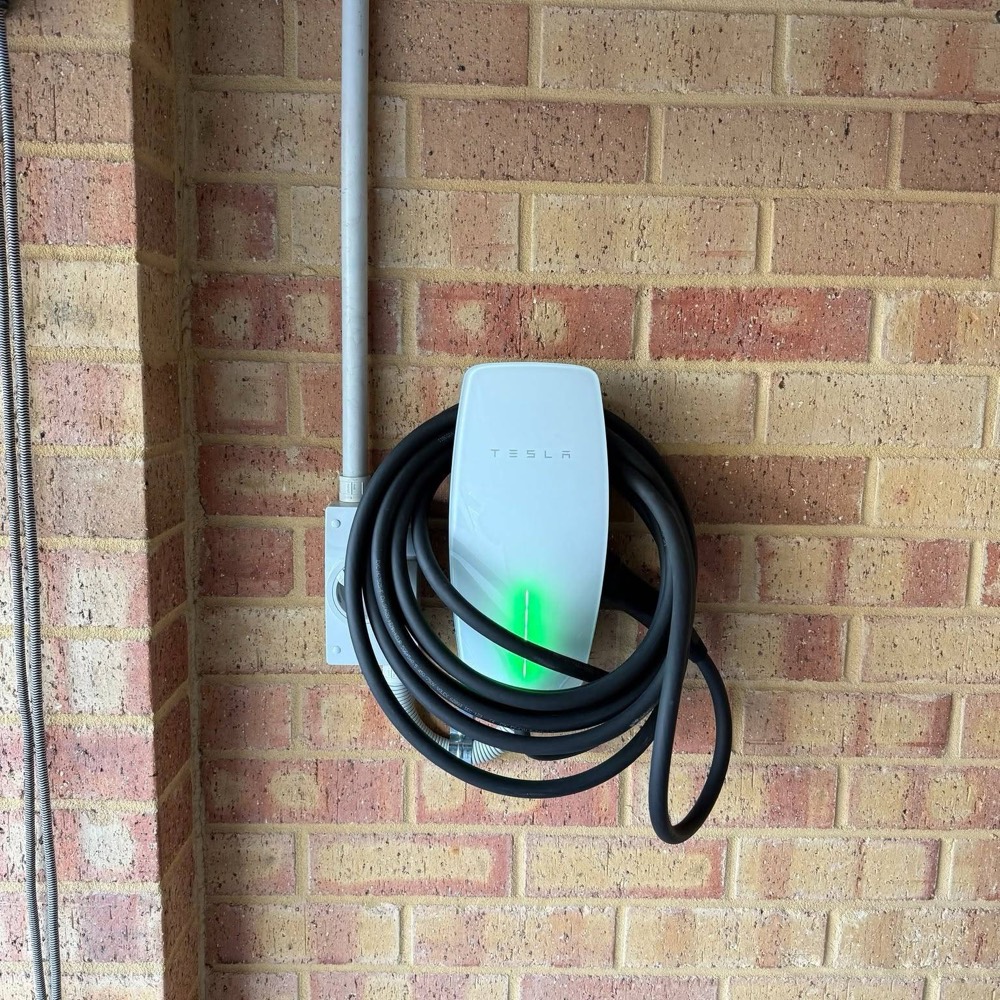
Tesla Wall Connectors are one of the chargers we install most. Many of our recent Google reviews are from Tesla charger installs, and customers often mention that we set the charger up and showed them how it works before leaving.
If you’ve already bought a Wall Connector, send us a photo of your switchboard and where you’d like it mounted. If you haven’t bought one yet, we can talk you through whether it suits your supply and your car.
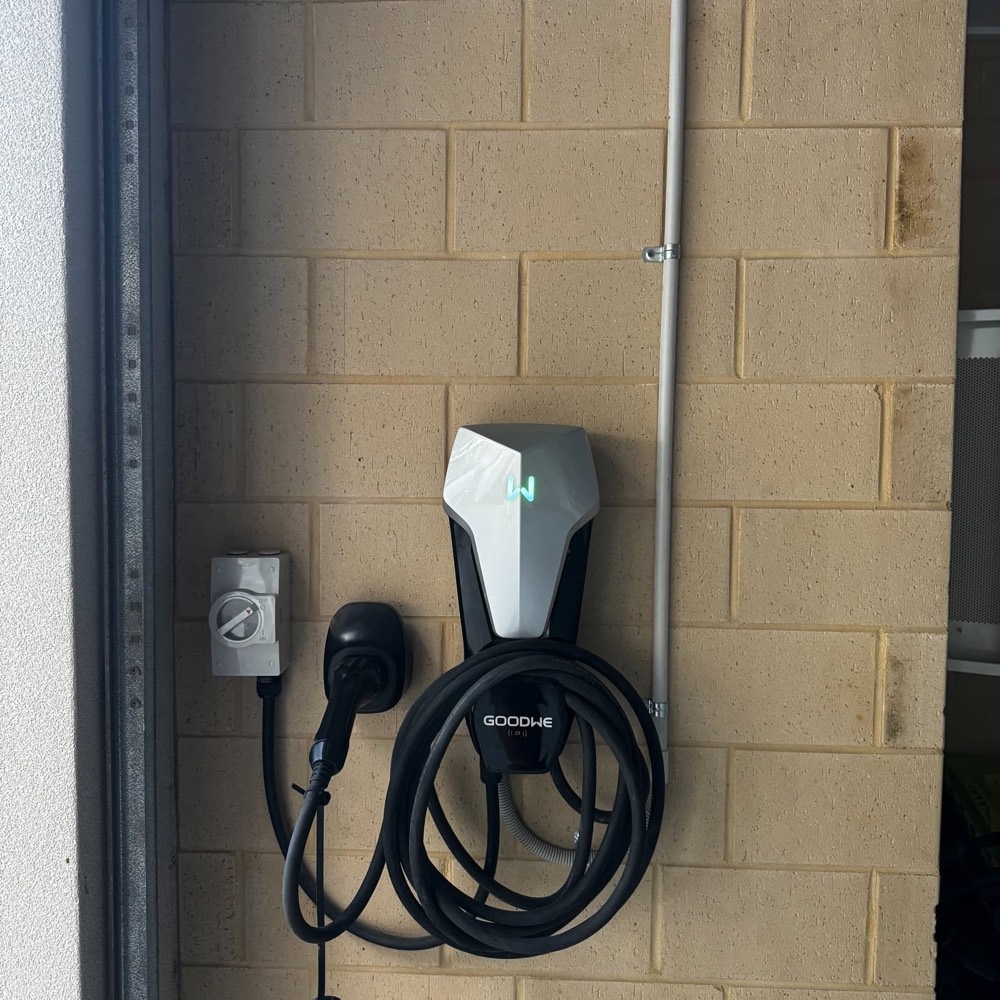
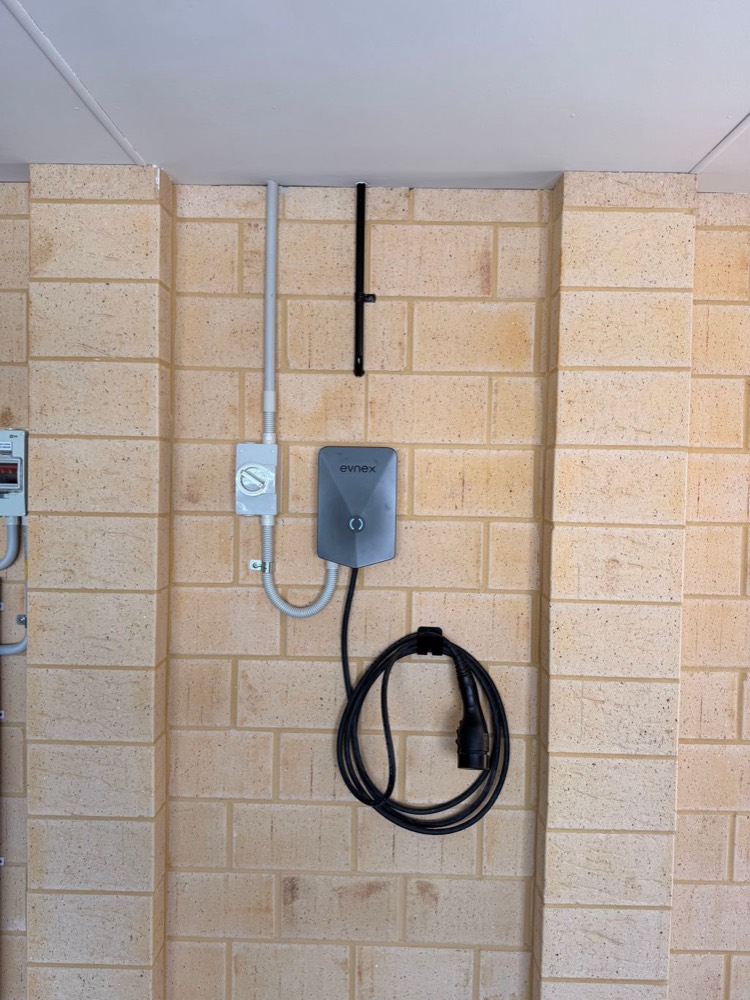
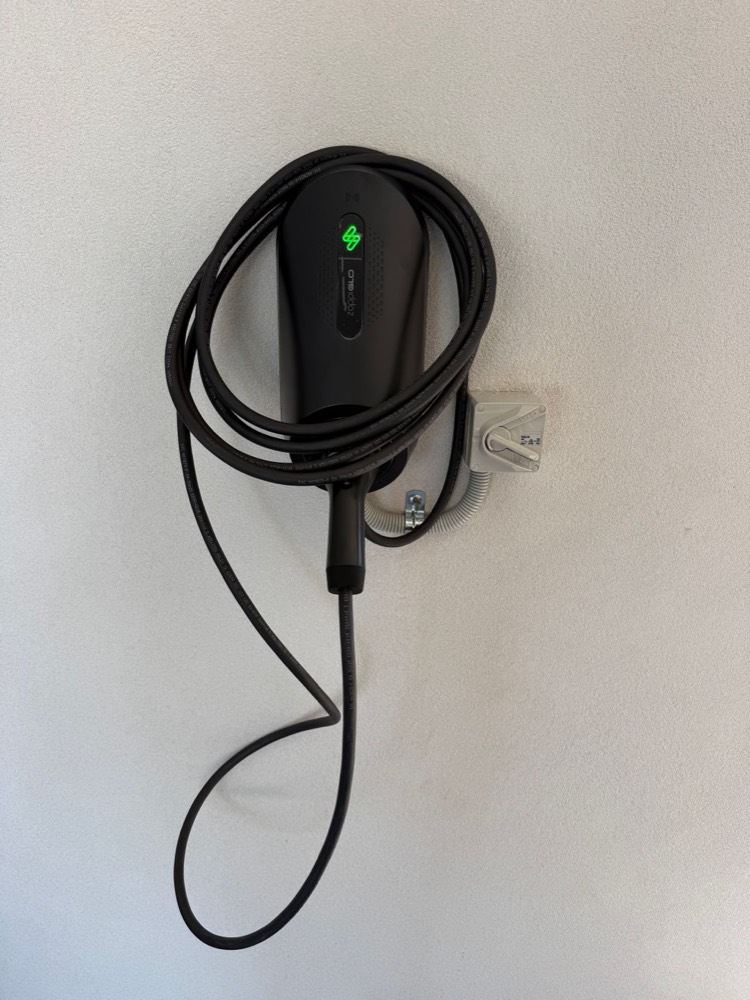
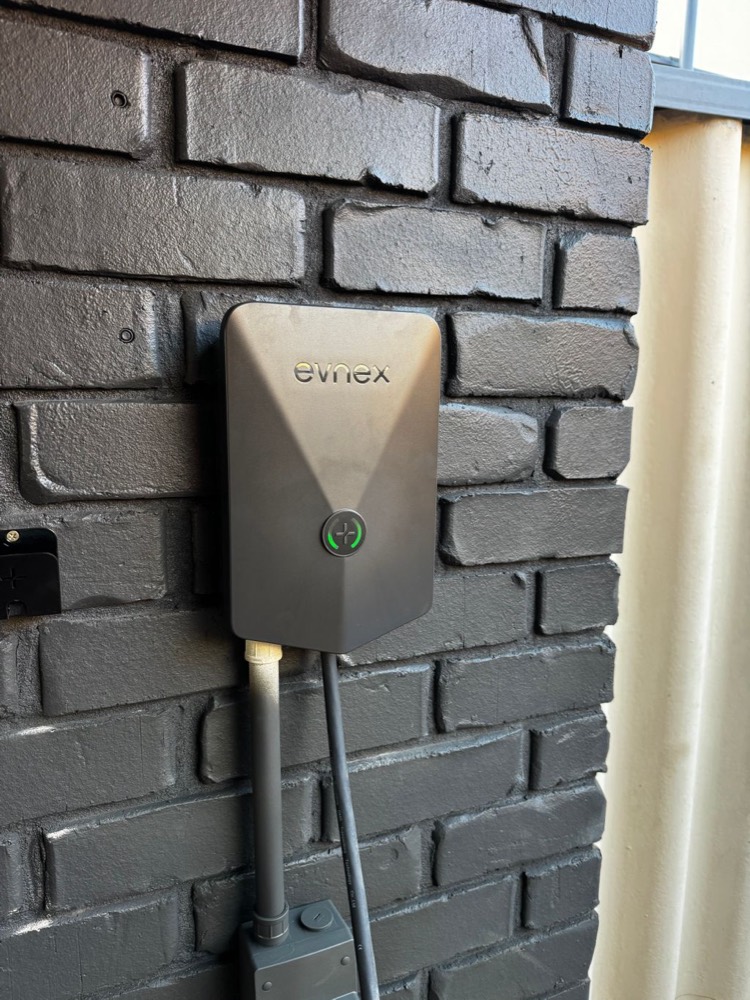
We also install Evnex, myenergi zappi, GoodWe and other brands. See some recent installs below.
Chargers we’ve installed
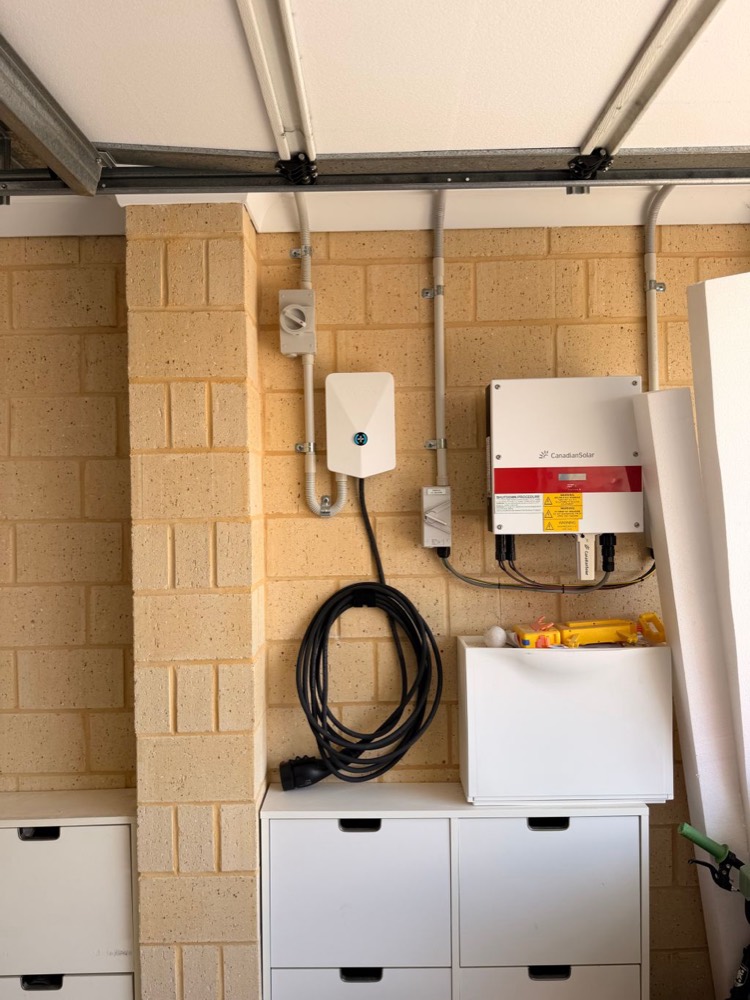
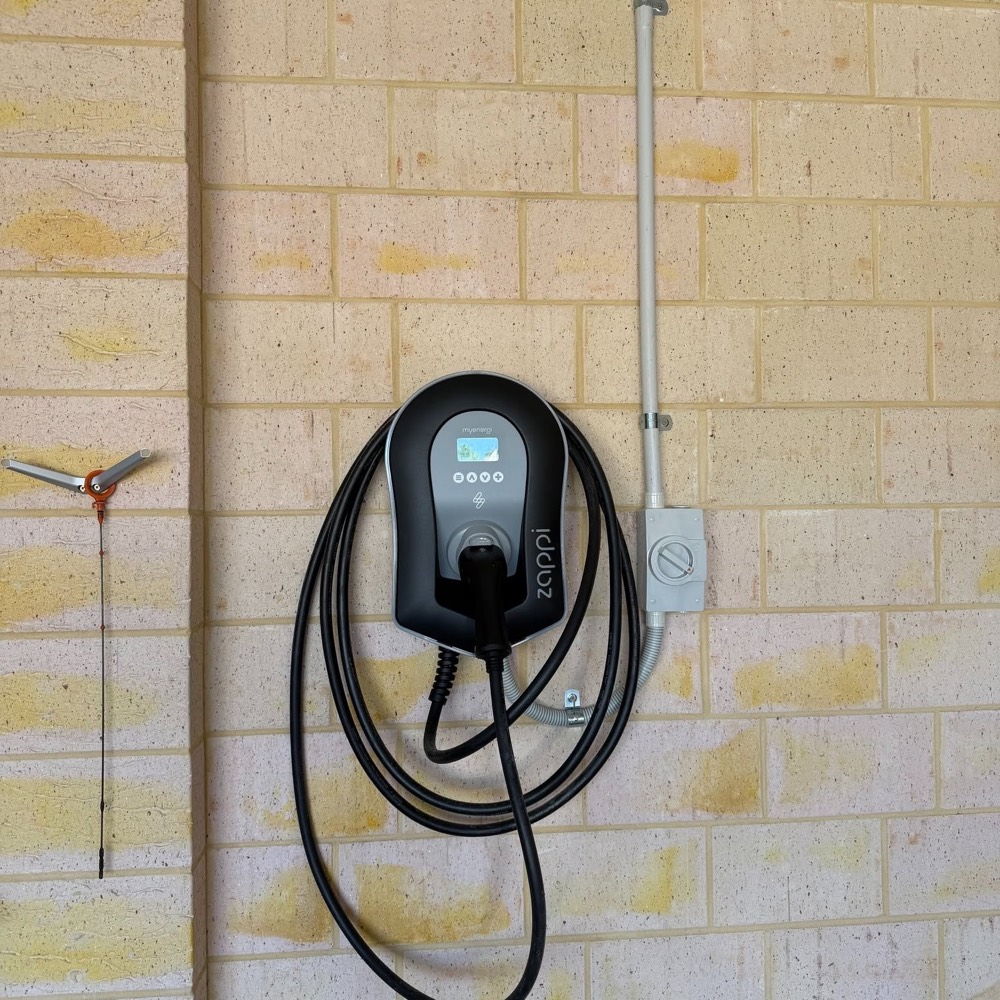
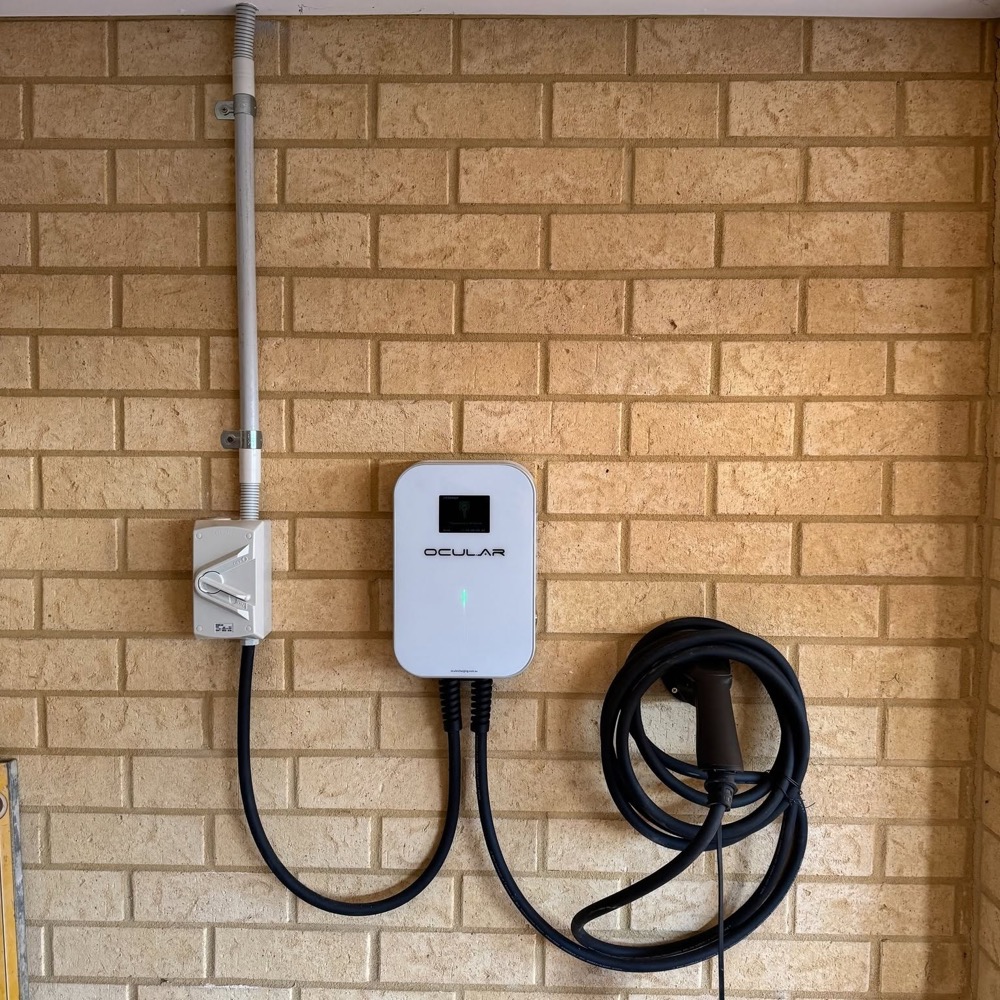
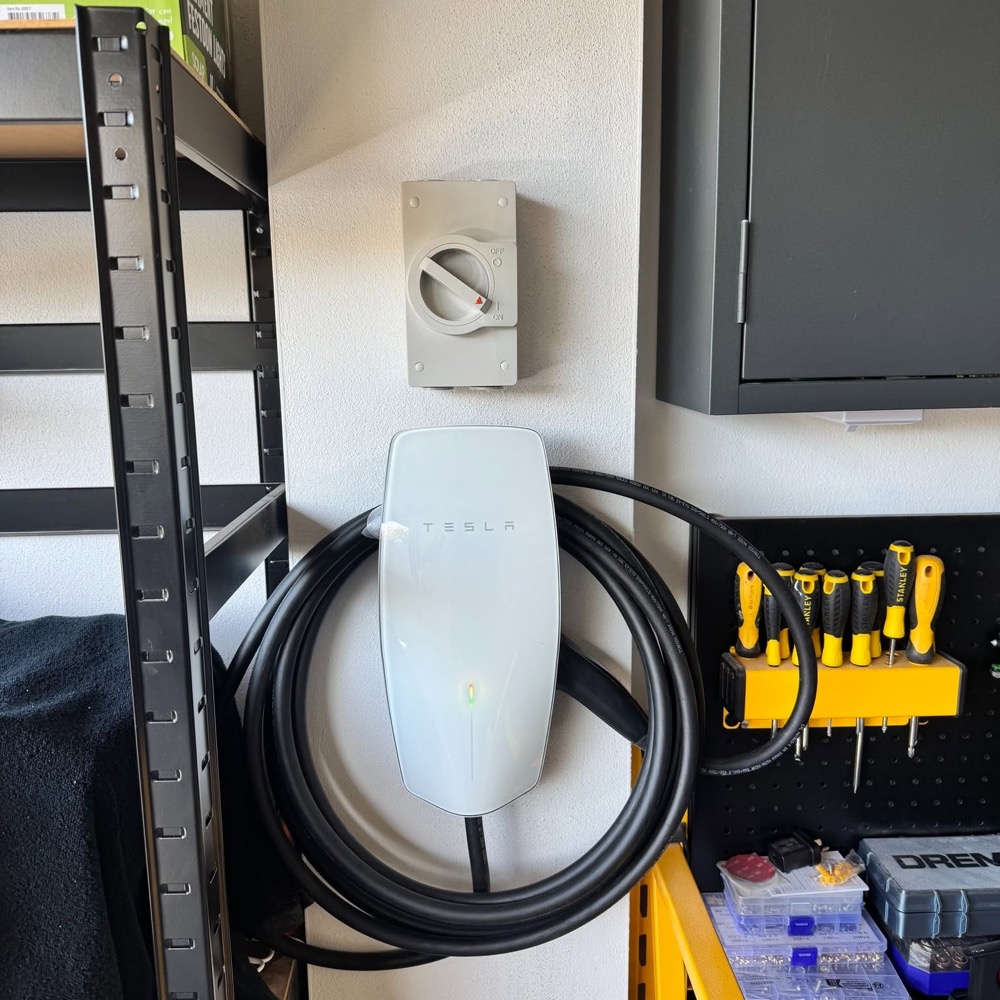
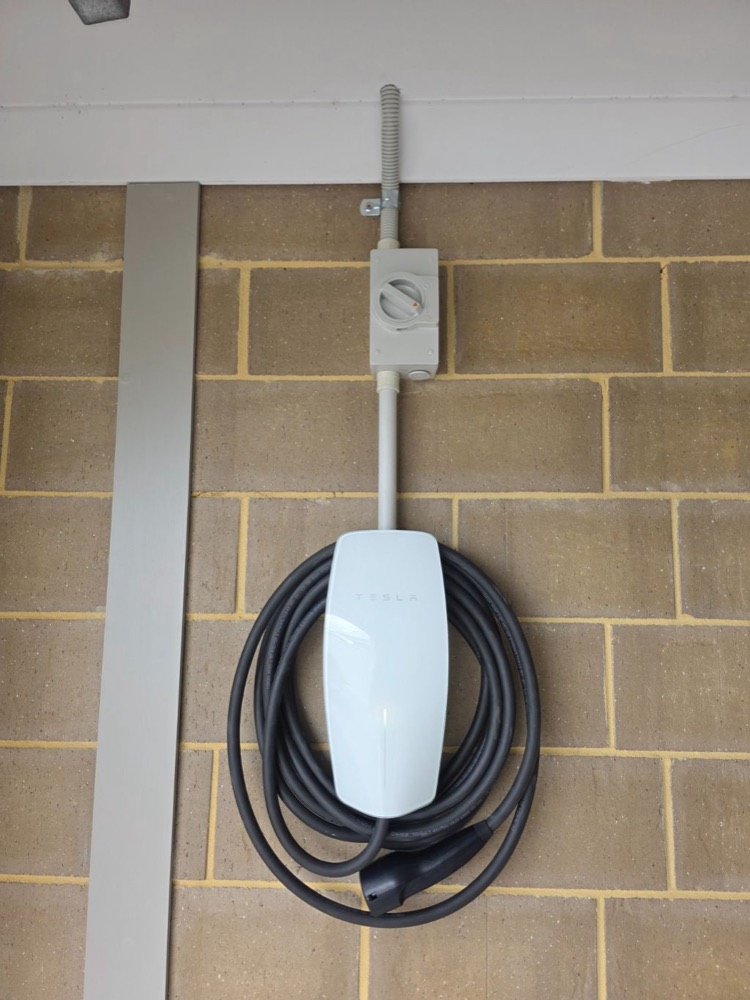
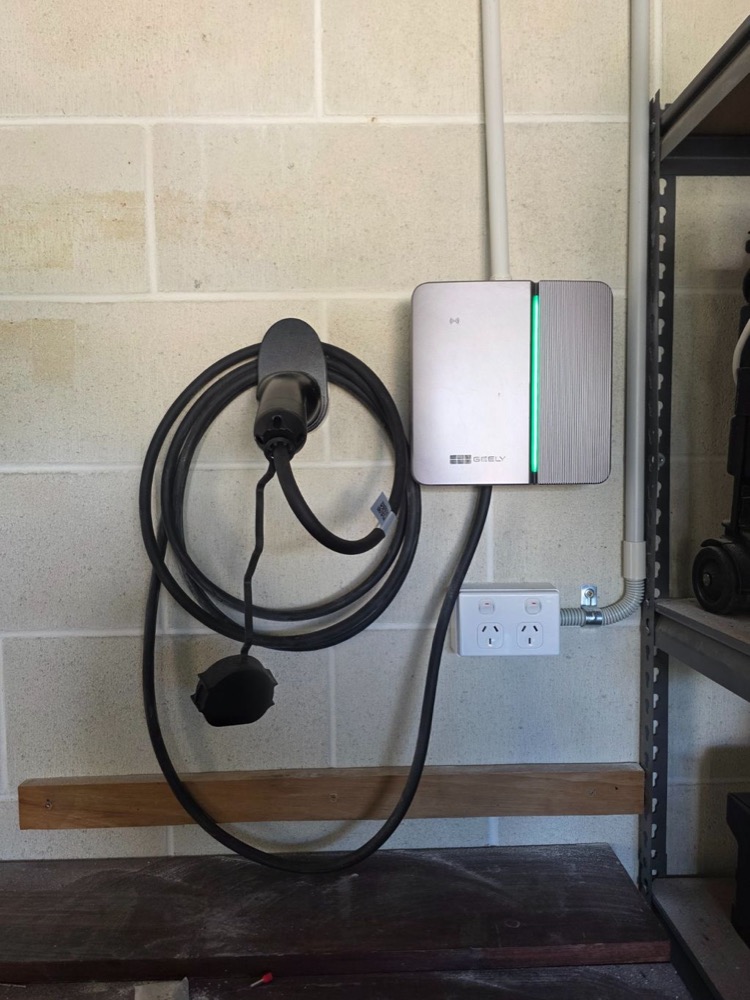
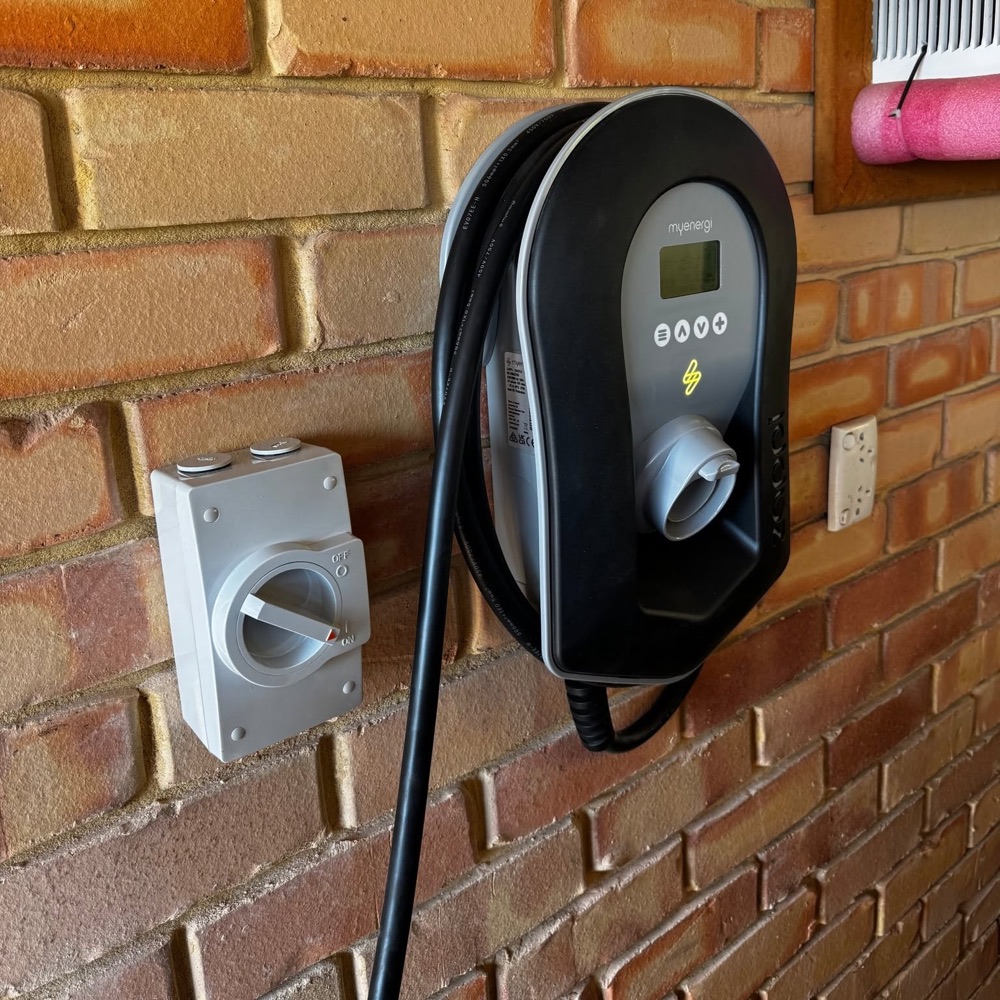
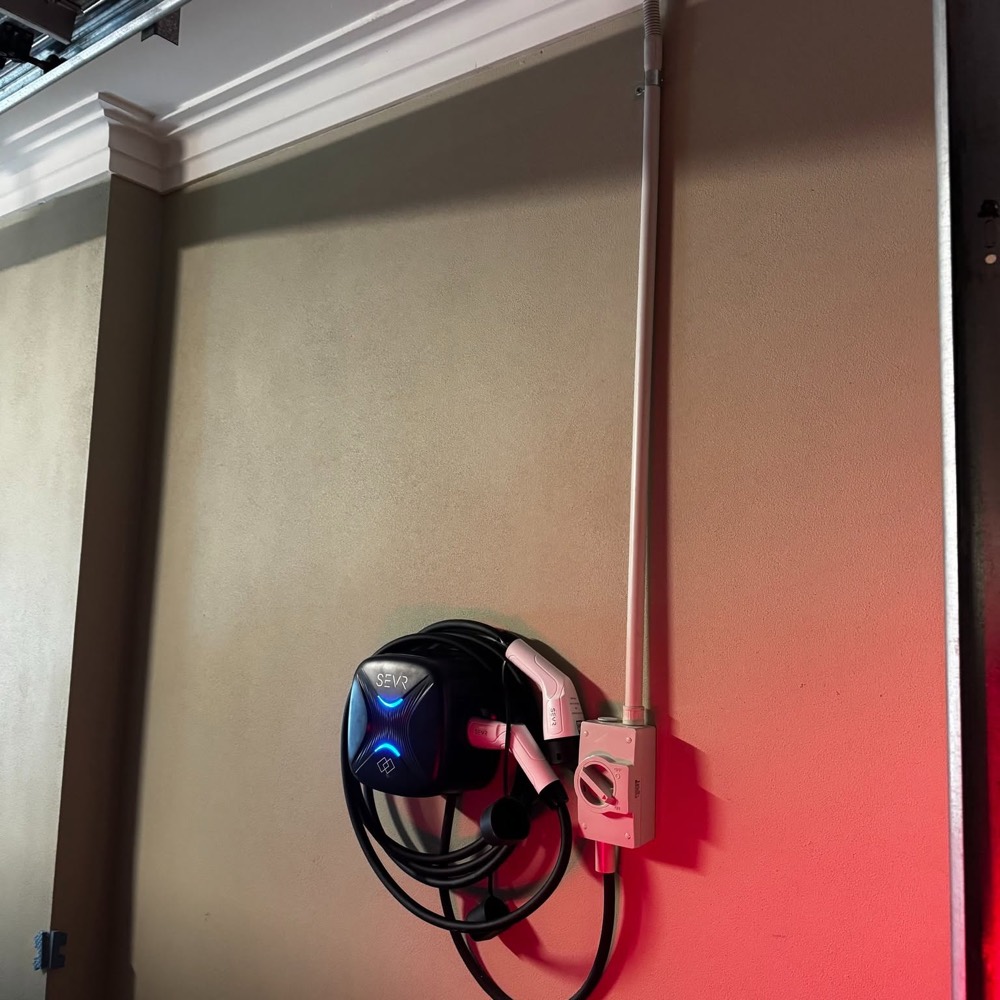
A few recent J & C installs around Perth, including Tesla, Evnex, myenergi zappi, GoodWe, Ocular and Geely chargers.
EV charger questions
How much does EV charger installation cost?
Most installs cost $650 to $1,200 including GST, for installing the charger. The charger itself is extra. See what changes the price.
Do I need three phase power for an EV charger?
No. A single phase charger of about 7 kW suits most daily driving, since most cars replace a typical day’s use in a few hours overnight. Three phase only helps if your car can accept more than about 7 kW of AC power and you need faster charging. Read the full answer.
Will my switchboard need upgrading?
Sometimes. It depends on space, the existing protection, the board’s condition and your supply capacity. A photo of the board usually tells us. About switchboard upgrades.
Can you install a charger I already bought?
Generally yes, if it’s suitable for your supply and the location. Send us the brand and model with your enquiry.
Can I just use a normal power point?
Yes, with a compatible portable EV charger, although charging will be slower than a dedicated wall charger. Have an electrician check that the outlet, wiring and circuit protection are suitable.
For regular portable charging, we recommend installing a 15A power point on its own dedicated circuit, or a dedicated 32A outlet, provided your charger supports it. Avoid extension leads, double adaptors and power boards. A dedicated wall charger offers faster charging and, depending on the model, smart scheduling and solar charging features.
What EV owners say
A big thank you to JCE Electrical for a fantastic install of my Tesla power connector and upgrading of switchboard and smoke alarm professional service detailed advice Just a pleasure to deal with I recommend to anyone 😊
Amazing service. Quoting was flexible with many options to choose and no pressure to buy. Received text reminder and guys called on approach. Confirmed all work and placement before starting. Confirmed happy with end result and helped setup Tesla charger. Definitely recommend.
Tesla EV charger installation, exceptional workmanship, great communication through whole process, very quick to attend and best price out of multiple quotes. Highly recommend these guys!
We had a Tesla wall charger installed by J&C Electrical and they were fantastic. Their office staff provide excellent customer service, with outstanding communication. Antonio arrived on time and did a brilliant job installing the charger, leaving no mess. They are competitively priced as well. I highly recommend this company!
I recently reached out to J&C for a quote to install my Tesla charger. I cannot fault their service, from the competitive quote they provided, to corresponding via text and email. The job was promptly scheduled in and I was advised that Noah would be my installer on the day. Noah arrived on time, he was professional, friendly and provided a quality result. The job was completed to a high standard and the area was left clean and tidy. Will definitely recommend J&C, and will be using them for any electrical work in future. Cheers guys!
Did a great job installing a Tesla EV charger for me in Wembley. Got here on time, messaged beforehand, left the area tidy. Highly recommend.
Read our Google reviews What our 634 online reviews say Leave a Google review
Getting an EV charger quote starts with a few simple details.
Fill in the EV charger quote form below and add a couple of photos. We’ll review your switchboard and supply, and send you a price upfront.
Tell us about your car and charger
Open our EV charger quote form, tell us your car and whether you already have a charger.
Add a few photos
Your switchboard with the door open, and the spot where you’d like the charger mounted.
We review and quote
Our team checks your switchboard and supply, then sends you a price upfront, or contacts you if a site visit is needed.